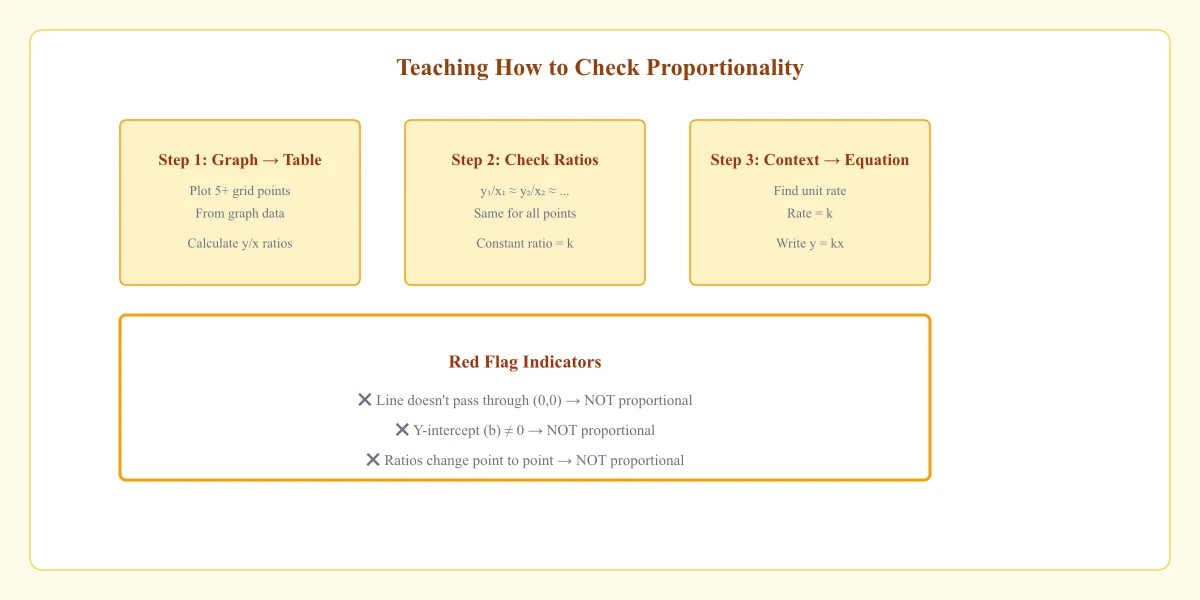
How to Teach Proportional Relationships Clearly
Use practical lesson ideas, visual aids, and practice structures to teach proportional relationships more clearly to middle school math students.
ProportionalRelationship.com
Calculators, graph checkers, step-by-step guides, and free classroom resources — everything students, teachers, and parents need to understand proportional relationships, unit rates, and the constant of proportionality.
Solve proportional relationship problems, check your work with interactive calculators, and see step-by-step explanations.
Try the calculators →Download printable worksheets, exit tickets, and unit packs aligned to 7.RP standards. Assign, print, and teach with confidence.
Classroom resources →Help your child with homework, find tutoring support, and get clear explanations you can use at the kitchen table.
Parent guide →A proportional relationship is a relationship between two quantities where they always change at the same rate. In math terms, this means the ratio between them stays constant. The standard form is y = kx, where k is the constant of proportionality — the number that tells you how much y increases for every increase of 1 in x.
Proportional relationships show up everywhere in middle school math: finding the best price per ounce at the grocery store, calculating speed in miles per hour, scaling a recipe up or down, and determining the unit rate from a table or graph. They are also the foundation for understanding slope and linear equations in later grades.
To identify a proportional relationship, you can test it three ways. From a table, divide each y by its x — if every quotient is the same, it is proportional. From a graph, check that the line is straight and passes through the origin (0,0). From an equation, make sure it can be written as y = kx with no extra constant term. This site has interactive checkers for all three methods, plus a cross-multiplication checker for verifying proportions in ratio form.
Whether you are a student working through a homework assignment, ateacher preparing a lesson on 7.RP.A.2, or a parent helping your child study for a quiz, this site has everything you need. Explore the calculators, checkers, worksheets, and guides below to master proportional relationships step by step.
Learn proportional relationships with graphs, tables, equations, examples, calculators, and classroom resources. Everything you need for 7th-grade math mastery.
Learn unit rate with step-by-step examples, comparison problems, real-world applications, and interactive calculator tools.
Understand how graphs and tables show proportional relationships, how to test them, and how to find the constant of proportionality from each representation.
Find and interpret the constant of proportionality from graphs, tables, equations, and word problems. Complete guide with examples, practice, and calculator.
Solve proportional relationship problems, find missing values, and see step-by-step explanations with examples.
Unit Rate Calculator with ExplanationCalculate unit rates fast and learn how to compare prices, speed, and ratios step by step.
Constant of Proportionality CalculatorFind the constant of proportionality from tables, graphs, equations, or word problems.
Equivalent Ratios CalculatorGenerate equivalent ratios, simplify ratios, and understand how ratio tables work.
Check your cross multiplication work and solve missing values in proportions.
Is This Graph Proportional? CheckerEnter points or values to check whether a graph shows a proportional relationship and why.
Proportional Table CheckerEnter table values to test whether the relationship is proportional and identify the constant.
Proportional Equation CheckerCheck whether an equation represents a proportional relationship and identify the constant.
Use practical lesson ideas, visual aids, and practice structures to teach proportional relationships more clearly to middle school math students.
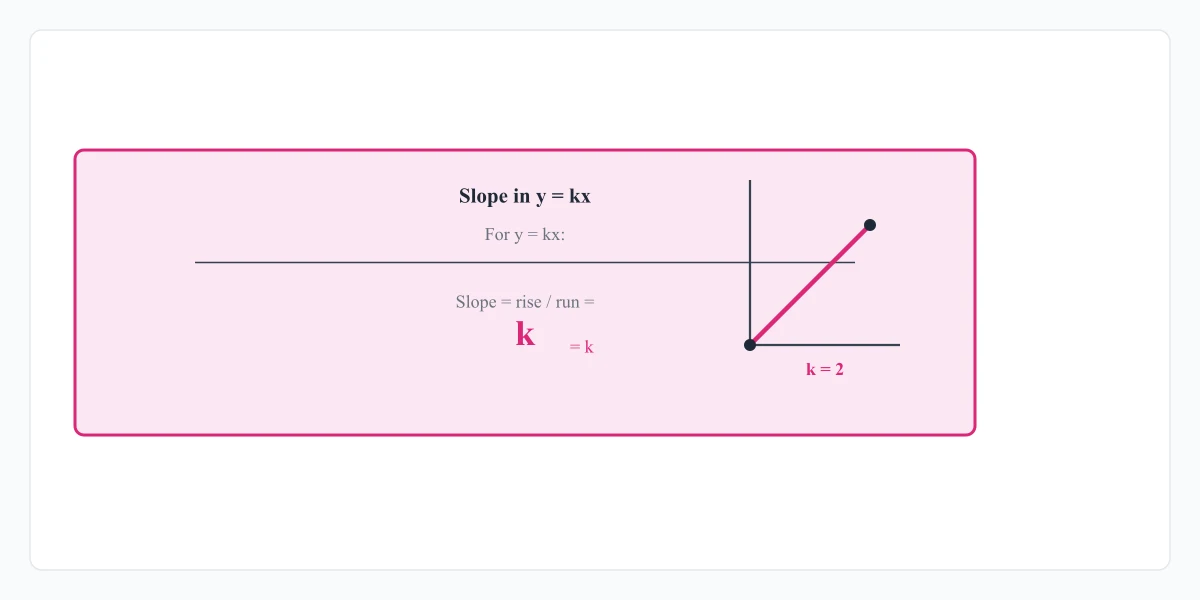
See how slope, unit rate, and the constant of proportionality are the same number when a line passes through the origin. Complete with examples and visuals.
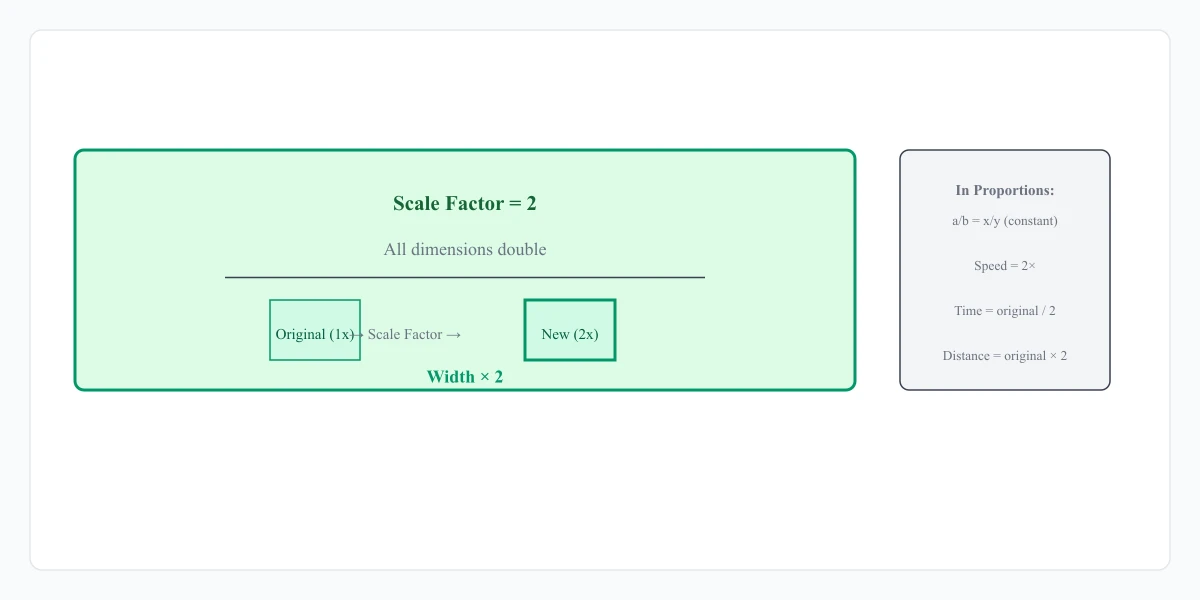
Learn how scale factor connects to proportional reasoning, similar figures, and geometry problems. Step-by-step examples with enlargements and reductions.
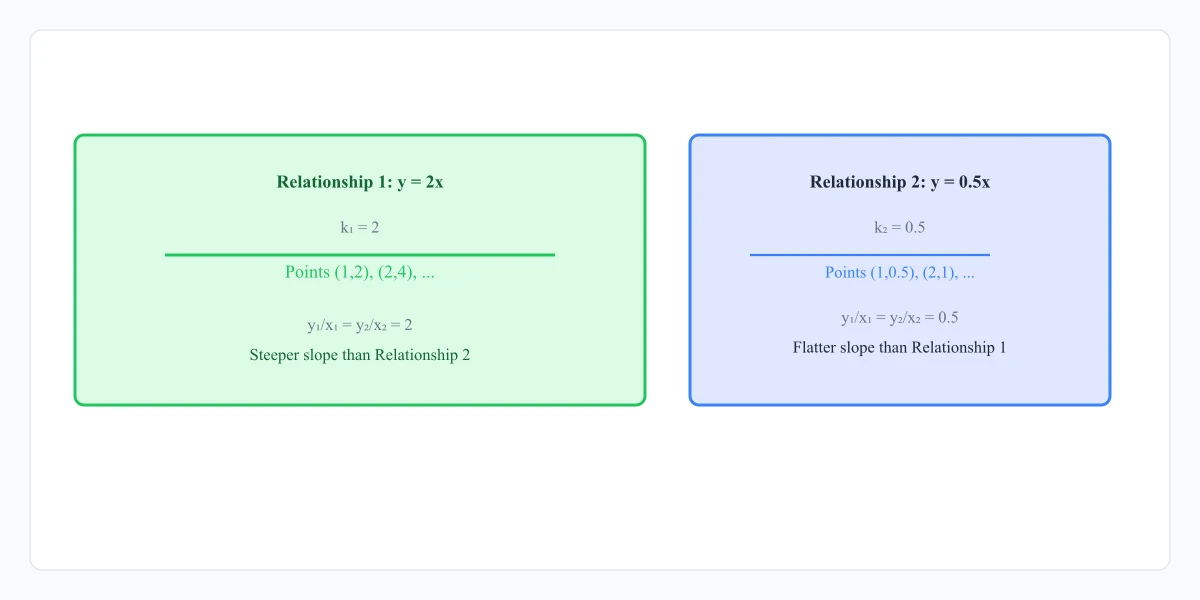
Learn how to compare proportional relationships and decide which one has the greater constant of proportionality or unit rate using tables, graphs, and equations.
Download practice sets, exit tickets, and unit reviews aligned to 7.RP standards. Delivered straight to your inbox.
Browse WorksheetsGet one-on-one help from a verified math tutor. Wyzant connects you with experienced teachers who can walk through proportional relationships step by step.
Find a Tutor on Wyzant